TL;DR
A CCTV drain survey sends a waterproof camera through your pipework and streams a live picture back to the engineer, showing blockages, cracks, root intrusion, displaced joints, collapsed sections and general pipe condition that you cannot see or guess at from ground level. In Coventry, where drainage ranges from Victorian clay pipe around Earlsdon and Chapelfields to post-war pitch fibre in Tile Hill and Bell Green, a survey is the only reliable way to tell a one-off blockage apart from a structural fault that will keep recurring. Findings are recorded against the WRc's MSCC5 defect classification, giving you clear, evidence-based grounds for deciding what happens next. If you're buying a Coventry property or fighting a drain that keeps blocking, request a CCTV drain survey online and get the full picture before you commit to any repair.
What the Camera Actually Shows You
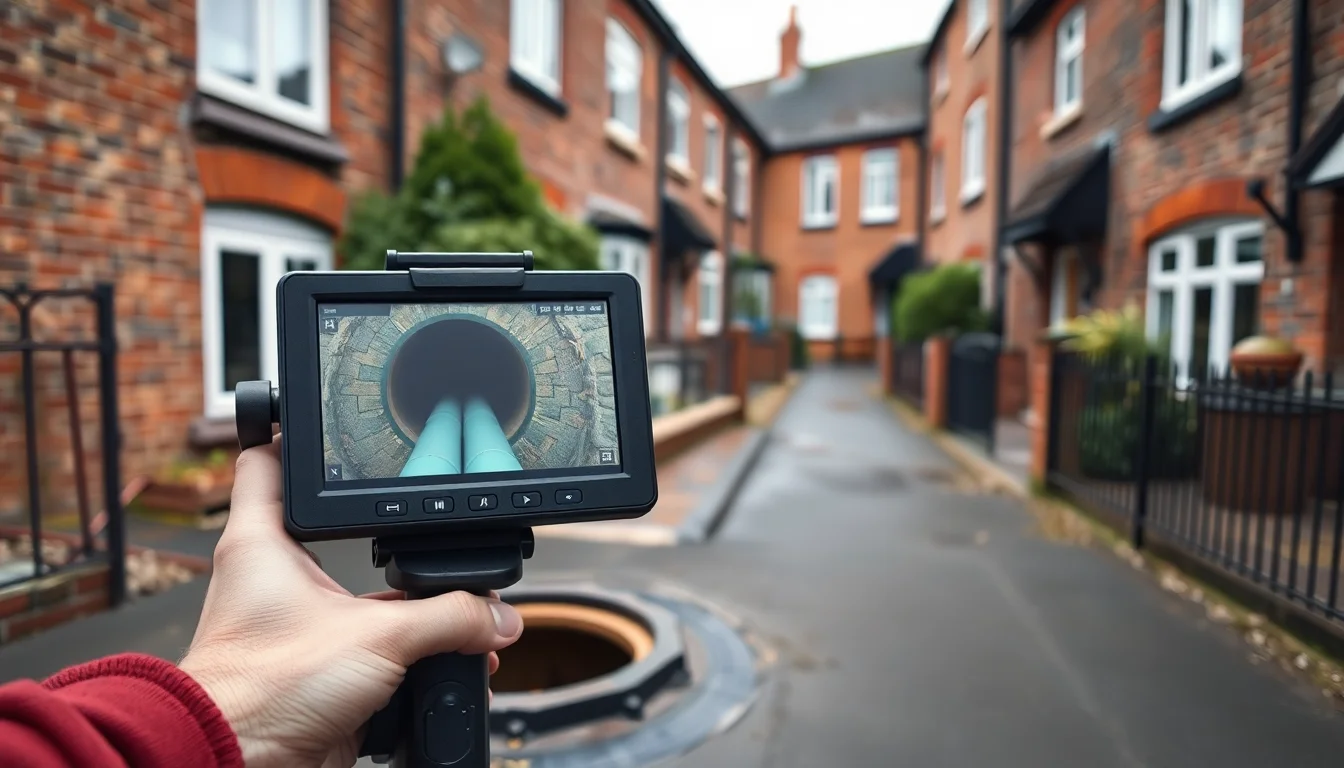
The survey head goes in through an existing access point, such as a rodding eye, a manhole, or occasionally the toilet pan itself, on a flexible push-rod, with a self-levelling colour camera and its own light source at the tip. As it travels along the run, a distance counter logs exactly how many metres in each feature sits, so anything found can be pinpointed from the surface afterwards without digging test holes.
What actually shows up on screen includes:
- Fat, limescale and general grease build-up narrowing the bore of the pipe
- Root fibres that have found their way in through a joint and formed a mat that snags waste
- Open or displaced joints, where sections of pipe have moved apart or out of alignment
- Fractures, cracks and full collapses
- "Bellies", sagging sections where the pipe has lost its fall and holds standing water and silt
- Unauthorised or misdirected connections, where a neighbouring property's waste has been plumbed into the wrong run
None of this is visible from a manhole cover or by rodding blind. A CCTV drain survey is the only way to actually see what's happening metres underground, rather than guess at it.
Why Coventry's Drains Throw Up So Many Findings
Coventry's drainage history is unusually varied, and that shows up in survey footage. Much of the city centre was rebuilt after the Blitz, so central infrastructure often dates from the 1950s and 60s reconstruction and is now well past the midpoint of its working life. The River Sherbourne, once an open river through the city, was progressively culverted from the Victorian era onwards and now runs beneath the centre in tunnels, feeding into the combined sewer system that Severn Trent Water manages. During heavy rain the culverted Sherbourne can reach capacity quickly, creating back-pressure that shows up as slow drainage or surcharging manholes in properties along its old course, including parts of Spon End and the city centre.
Underneath much of the city sits Keuper Marl, a heavy red clay typical of the Midlands. It swells when saturated and shrinks hard in dry spells, and that seasonal movement is what displaces pipe joints and cracks ageing clay pipework over years, not overnight.
Housing age adds another layer. Victorian terraces in Earlsdon, Chapelfields, Foleshill and parts of Stoke and Radford still run on original clay drainage well over a century old. The 1930s semis that fill out Cheylesmore, Stivichall and Eastern Green have clay systems approaching 90 years old. Post-war estates in Tile Hill, Willenhall, Bell Green and Wood End often used pitch fibre pipe, which delaminates and deforms internally as it ages and rarely shows a problem on the surface until a survey finds it. Former industrial sites around Canley, now redeveloped for housing, can also throw up drainage that was never designed for domestic use.
The WRc's MSCC5 Grading, Explained Simply
Survey footage isn't just watched and filed. Every defect found is logged against the WRc's Manual of Sewer Condition Classification (MSCC5), the industry-standard system used across the UK water and drainage sector. Each defect gets a structural or service grade from 1 (minor) to 5 (severe, requiring urgent attention), covering things like fractures, deformation, root intrusion and infiltration separately from service issues like blockage-causing debris.
The point of grading is that it takes the guesswork and sales pressure out of the conversation. You get a written report that states, in a recognised industry format, exactly what condition your drain is in and how urgent each defect is. That's useful whether you're deciding on repair work yourself or need to show a report to a solicitor, insurer, or Severn Trent Water if there's a dispute over whose pipe a fault sits on.
When It's Worth Booking a Survey
A CCTV survey earns its keep in several situations:
- **Before buying a property** — a pre-purchase drain survey can catch a collapsed or root-infested drain before you exchange, when it's still the seller's problem to fix or negotiate on, and our guide for home buyers covers what to do with the findings
- **Recurring blockages** — if the same drain keeps blocking despite rodding or jetting, something structural is usually causing it, and a drainage investigation will find the root cause rather than just clearing the symptom
- **Unexplained damp or smells** — particularly in older Coventry properties with basements or solid floors close to drainage runs
- **Before garden or extension work** — knowing exactly where a drain runs and its condition avoids expensive surprises mid-project
- **Responsibility disputes** — if you're unsure whether a fault sits on your private drainage or Severn Trent Water's public sewer, footage with a distance count settles it
What Happens After the Survey
You get a report and the footage itself, with every defect graded and located by distance and, where relevant, by which manhole or access point it's nearest to. If the drain is sound, that's often enough on its own: peace of mind before completion on a house purchase, or confirmation that a blockage really was a one-off. If defects are found, the report gives you what you need to plan drain repairs properly, whether that's a targeted patch, a full structural reline, or excavation for a genuine collapse, rather than paying for guesswork. If you want a sense of what drives the price before you book, our guide to CCTV drain survey costs in Coventry walks through the factors that affect it.
Booking a CCTV Survey in Coventry
Whether you're weighing up a Victorian terrace in Earlsdon, a 1930s semi in Cheylesmore, or dealing with a drain in Tile Hill or Foleshill that just won't stay clear, a CCTV survey gives you facts instead of guesses. We also cover the surrounding area, including Kenilworth just outside the city, so if your property sits there the same survey process applies. Request a fixed-price CCTV drain survey online and find out exactly what's going on underground before you spend a penny on repair work you might not need.